
Packaging · Protective inserts
Molded pulp tray
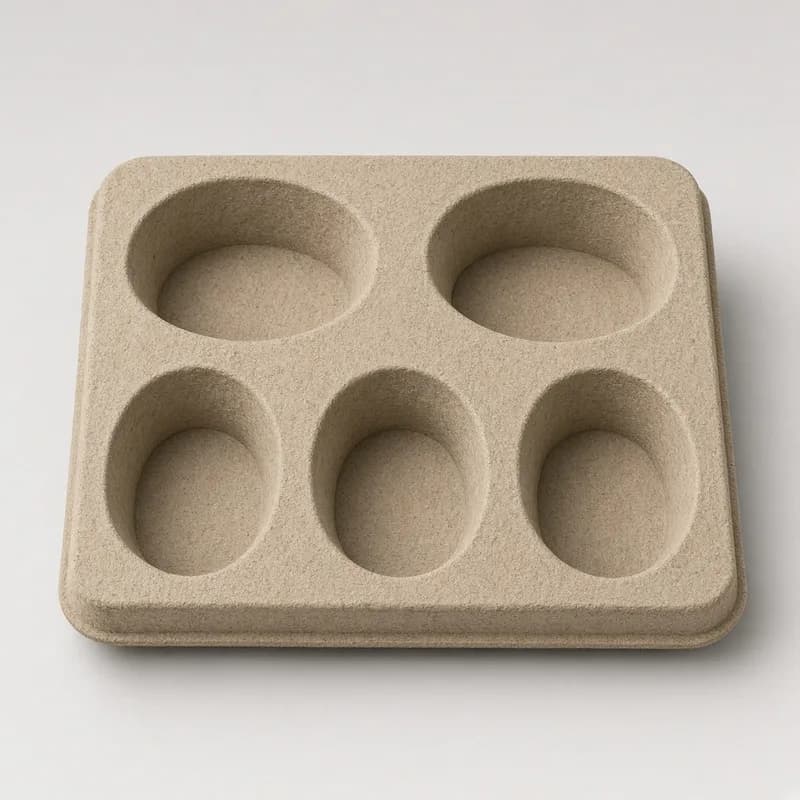
A molded pulp tray with oval cavities, where humidity swell and fiber dust matter more than a dry sample photo.
Last updated: September 2026
What this product is
Humidity is the test that a molded pulp tray has to pass, because dry samples always look fine. The potential factory risk is oval cavities that swell after a damp week and no longer cradle the product they were formed around. Typical trays sit in an estimated band of about 0.18 to 0.5 dollars from a 3,000-piece opener, with an indicative retail window of 1.2 to 2.8 dollars. Press the real product into a sample that has been held in humidity, not only into a fresh dry tray. Fiber dust on the face is the other miss, especially if the tray will sit against a clean retail unit. Trim edges and nesting height affect freight, so ask for a packed-carton trial before the tool is signed off. A logo deboss is possible on some tools, but a new cavity layout is a new mold. Color pulp is a dye conversation, not a free change.
Indicative sourcing numbers
These are desk estimates for a conversation, not a factory invoice and not a retail offer from this website.
- Indicative China sourcing price
- $0.18 to $0.50
- Suggested retail range
- $1.20 to $2.80
- Estimated gross margin
- 35% to 55%
Indicative estimates only. Actual margins vary by supplier, quantity, specifications, shipping, duties, taxes, marketplace fees, advertising and destination market.
Why it is interesting
- Pulp tooling already exists for oval cavities, so many briefs are a fit check rather than a first mold.
- The tray replaces loose fill for a shaped product without adding a plastic insert.
What to specify
- Form
- Molded pulp tray with oval cavities
- Fiber
- Natural or bleached pulp, stated on the order
- Fit
- Cavities checked with the real product after humidity
- Surface
- Fiber dust and trim watched on the face
- Nesting
- Stack height confirmed in an export carton
Customization and private label
A debossed mark can fit some existing tools; a new oval layout is a new mold, and dyed pulp is its own lot.
Some customization is realistic on this kind of product. Private label packaging is often possible once artwork is approved. Read how private label manufacturing in China is handled, and when a new product needs the OEM/ODM path.
How the desk would source it
- Note 1. Fit the real product after a humid hold, because a dry sample hides swell.
- Note 2. Count fiber dust and nesting height before the forming tool is approved.
The usual path is the same as other China factory sourcing: confirm the spec, compare factories, sample, then inspect before shipment. China supplier verification and China quality inspection are available. Goods can be received at the Xiamen warehouse and moved through China warehouse consolidation or sea, air, and express freight.
Questions about this product
Why is a dry sample not enough?
Cavities can swell in humidity and then miss the product that fitted on day one.
Is a new cavity count a setup change?
It is a new mold if the tool does not already have that layout.
What surface issue reaches the product?
Fiber dust on the face, especially against a clean retail unit.
Related sourcing notes
Ask the China desk about Molded pulp tray
Send this product on WhatsApp. Include quantity, destination country, and whether you need a logo or only a sample of the existing platform.