
Smart Products · Motion sensors
PIR motion sensor
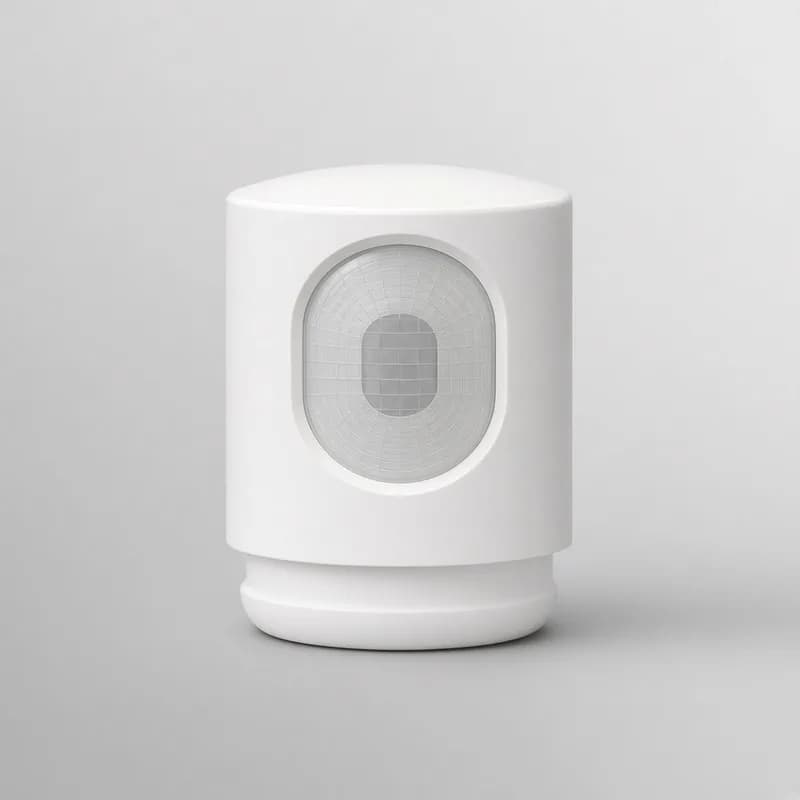
A small white PIR motion sensor whose lens pattern, not the housing color, sets what the unit can see.
Last updated: September 2026
What this product is
A PIR motion sensor is a lens in front of a small board, and the lens is the part a cheaper lookalike can quietly replace. The white housing will look the same in the photo either way. Write the lens code into the spec the way you would write a motor model. Walk-test the sample at the edge of the angle you intend to print, then again beside a warm lamp, because a sun-warmed wall is a classic false trigger. If you want a pet-immune line on the carton, you need a test you can describe. The word alone is not a spec. A first order can change housing color and the insert. A new radio or a private hub is development and should be priced as such. Most opening orders use the factory app, and the manual should say that. The band here is indicative ex-works for a common battery PIR before freight. Radio rules and the cell sit outside it. Do not copy another brand's detection diagram onto your box.
Indicative sourcing numbers
These are desk estimates for a conversation, not a factory invoice and not a retail offer from this website.
- Indicative China sourcing price
- $4 to $9
- Suggested retail range
- $18 to $34
- Estimated gross margin
- 30% to 48%
Indicative estimates only. Actual margins vary by supplier, quantity, specifications, shipping, duties, taxes, marketplace fees, advertising and destination market.
Why it is interesting
- Lens code is a controllable part, which makes two sensor quotes comparable if you refuse a silent optic swap.
- A walk-test at the cone edge is obvious on the sample, before a carton quantity is committed.
What to specify
- Form
- Small white PIR body
- Lens
- Lens code controlled; cone checked by a walk test
- Radio
- Protocol confirmed; rules outside the unit estimate
- App
- Factory app on most first orders
- Power
- Cell type confirmed; battery rules quoted apart
Customization and private label
Housing color and a printed card are ordinary; a different lens code, a private hub, or a new radio is outside the first-order unit band.
Some customization is realistic on this kind of product. Private label packaging is often possible once artwork is approved. Read how private label manufacturing in China is handled, and when a new product needs the OEM/ODM path.
How the desk would source it
- Note 1. Lock the lens code on the order and walk-test both the claimed edge and a warm lamp.
- Note 2. Plan the first manual around the factory app unless a private hub is its own project.
The usual path is the same as other China factory sourcing: confirm the spec, compare factories, sample, then inspect before shipment. China supplier verification and China quality inspection are available. Goods can be received at the Xiamen warehouse and moved through China warehouse consolidation or sea, air, and express freight.
Questions about this product
Why lock the lens code?
A lens that looks similar can narrow the cone or change what the sensor ignores.
What causes false triggers in a sample room?
Heat sources such as a heater or a sun-warmed wall inside the pattern. Write down what the walk test catches.
Are radio rules inside the 4 to 9 dollar band?
No. Radio, the app, and destination electrical or battery rules are outside the unit estimate. Most first orders use the factory app.
Related sourcing notes
Ask the China desk about PIR motion sensor
Send this product on WhatsApp. Include quantity, destination country, and whether you need a logo or only a sample of the existing platform.